Call
Call Enquire
 Search


Menu

Manage my booking

| Sales | |
| Monday - Friday | 09:00 - 20:00 |
| Saturday | 09:00 - 16:00 |
| Sunday | 10:00 - 17:00 |
| Bank Holiday | 10:00 - 16:00 |
| Aftersales | |
| Monday - Friday | 09:00 - 17:30 |
| Bank Holiday | 10:00 - 16:00 |
Speak to a Travel Expert
Call Now!


 08 Jul 2026 from £2,791
08 Apr - 18 Apr 2026

7 Nights onboard Scenic Ruby

All Inclusive Drinks*

Overseas Transfers

Butler*

Complimentary Dining*

Gratuities*

Shore Excursions*

Wi-Fi*
Not Available
Sold Out
Sold Out
from
£6,080
per person
Our experts are here to help
Call us today on 0203 930 4640 or enquire online.





 Save up to 30%* with Return flights^ and Complimentary door-to-door private chauffeur transfers~ included.South East Asia - Save up to 25%* with Flight Credit included.*Worldwide Voyages - Save up to 25%* with return flights included plus complimentary door-to-door private transfers*
*Select voyages. T's and C's apply
Day 1
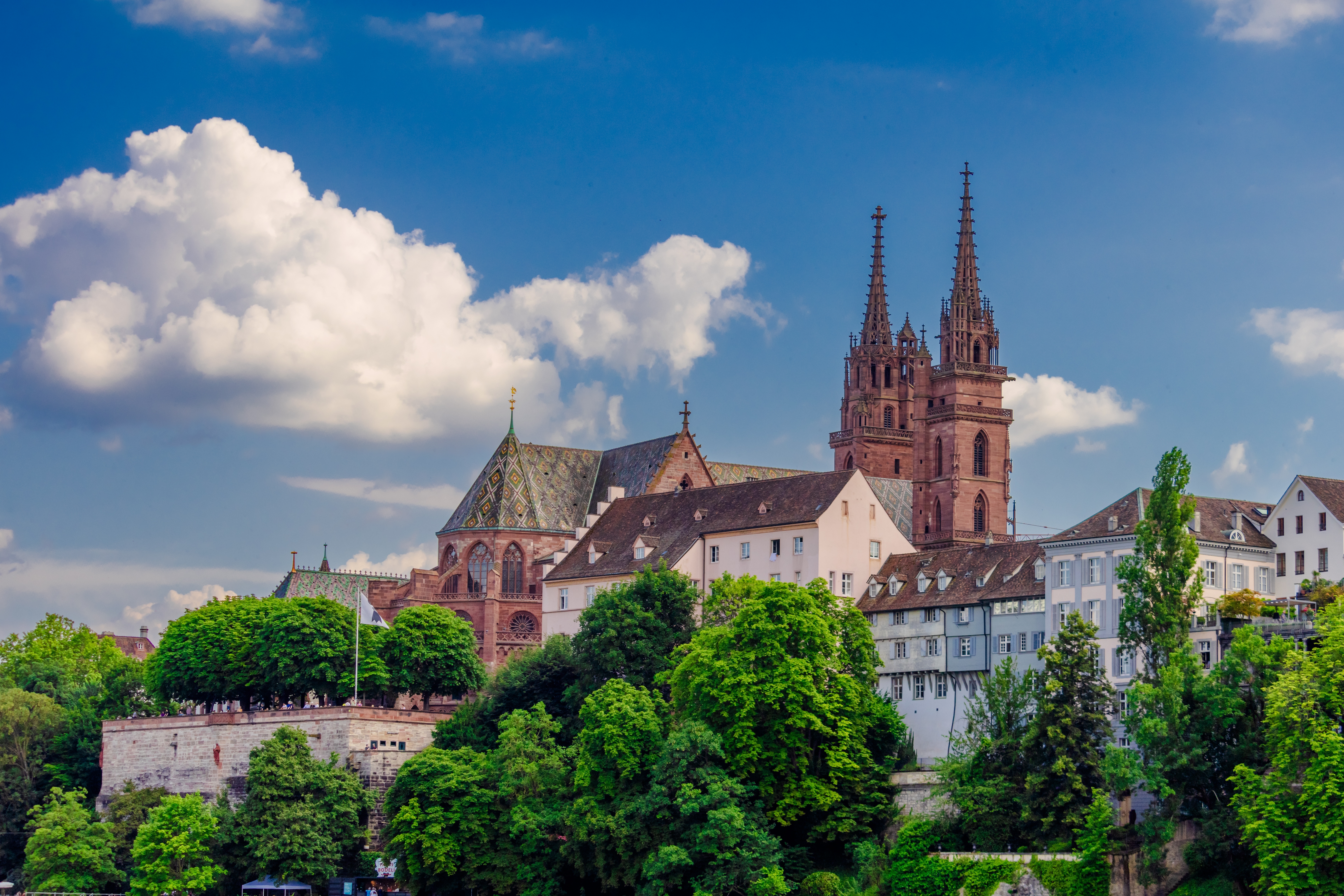
Welcome to Switzerland and the start of your European cruise. Fly into Zurich then transfer to Basel (Huningue), a centre of art and culture that sits on the banks of the Rhine River.
Board your 5-star Scenic Space-Ship this afternoon, meet your fellow guests and raise a glass to the start of a fascinating journey ahead of you at this evening’s welcome reception.
Please book your rail to arrive into Basel prior to 03:00 PM, or please book your flight to arrive into Zurich prior to 01:30 PM.
The city of Zurich, a global center for banking and finance, lies at the north end of Lake Zurich in northern Switzerland. The picturesque lanes of the central Altstadt (Old Town), on either side of the Limmat River, reflect its pre-medieval history. Waterfront promenades like the Limmatquai follow the river toward the 17th-century Rathaus
Day 1
Basel is a city in northwestern Switzerland on the Swiss, French and German borders. It is located on the bend of the River Rhine and benefits from a Mediterranean climate. It is the third most populated city in Switzerland and has been the commercial hub for Swiss arts and culture since the Renaissance. In 1967 the people of Basel voted to acquire two paintings by Picasso, who was so moved by the Basel people that he donated 3 paintings and a study to the city's Kunstmuseum (Museum of Fine Arts). Visit the Augusta Raurica, one of the largest Roman archaeology parks in Switzerland, and enjoy a river crossings over the River Rhine by non-motorised ferries. During the summer months, time is spent outdoors, either swimming in the River Rhine, dining al fresco, enjoying open air concerts, cinema, street parties and festivals. Basel is home to over 20 restaurants that have won GaultMillau or Michelin awards, and boasts Switzerland's largest collection of theatre shows, including modern contemporary dance, touring and puppetry theatre.
Day 2
Your Scenic Space-Ship will dock in Kehl this afternoon, just across the border from the French city of Strasbourg, the capital of the Alsace region. Here, sherbert-coloured, half-timbered houses heave together on the banks of a complex network of canals. It’s a captivating blend of France and Germany, of a medieval past and an innovative future. Strasbourg has an infectious, youthful energy and you’ll regularly see the locals enjoying spontaneous soccer games and pop-up wine bars.
Scenic Freechoice:
Explore the region on one of these Freechoice excursions:
Guided tour of Strasbourg: See the city’s most important sites on foot, like the cathedral, Petit France and the Grand Ile, and learn about its unique mixture of both French and German architecture and culture. (Note: this is an active walk.)
Alsace wine region: Travel by coach through the pretty Alsace wine region to the village of Obernai for some free time. Then visit Mittelbergheim for a wine tasting in a local cellar.
Cycle through Strasbourg: Hop on board an e-bike and explore the sights surrounding the city. Strasbourg has over 500 km of bicycle trails and you will explore some of these while cycling through the city’s charming suburbs past historic buildings beautiful parklands and charming canals.
Kehl is a town located in southwest Germany on the River Rhine, across from the French City of Strasbourg. The town is not known as a tourist destination, however it benefits from idyllic landscape and a water-rich environment. Walk or cycle along the Reinpromenade or the garden of the Zweubüchter and enjoy a picnic at one of Kehl’s numerous excavation lakes. Nature lovers will enjoy spotting animals hiding along the rivers, lakes and bushes. Discover Kehl’s turbulent war and peace history with a guided tour of the centre and its surrounding villages. Visitors will also experience the town’s habitat and culture which is characterised through the half timbered houses and streets. Kehl town centre features a large pedestrian zone with many retail outlets, street cafes and outdoor dining to enjoy. A few minutes by public transport and visitors will find themselves in the centre of metropolitan Strasbourg.
Day 3
Dock in Rastatt this morning, a Baroque town with an abundance of green spaces and two iconic palaces. It’s also the gateway to Baden-Baden, a spa town on the edge of the Black Forest. Its curative waters, thermal baths and luxurious hotels made it a favourite retreat of the European elite in the 19th century.
Scenic Freechoice:
Explore your way with one of these Scenic Freechoice:
Walking tour of Baden-Baden: Follow in the steps of the renowned Europeans who spent summers in this famed spa town two centuries ago. See the elegant Kurhaus, built in the 1820s with a casino and luxury shopping in its colonnade, and explore the remains of the Roman baths.
Baden-Baden spa visit: Relax and rejuvenate in the thermal baths of?Caracalla Spa, permanently and naturally heated by thermal waters some 2,000 metres under the Earth’s surface.
Schloss Favorite: Once a hunting lodge and summer palace for 18th century aristocrats (though used for seven weeks a year), Schloss Favorite is now the oldest of the German ‘porcelain palaces’ and the only one to survive intact.
Scenic Enrich
One of the most magnificent historic venues in the region, the Baroque Palace of Rastatt was modelled on the Palace of Versailles and hosts an evening of grandeur unlike any other. Explore the opulent palace and gardens, before sitting down to a private performance from accomplished musicians and a soloist. (Please note: When Baroque Palace of Rastatt is not available, this will be replaced with Bruchsal Palace)
Rastatt, Germany, is a charming town in the Baden-Württemberg region, known for its Baroque architecture and historic significance. The centerpiece is the Rastatt Palace, a stunning example of Baroque grandeur with its beautiful gardens. The town offers picturesque streets, vibrant markets, and a rich cultural scene. Located near the Rhine River, Rastatt combines historical charm with a lively atmosphere, making it a delightful destination for exploring its architectural heritage and enjoying its local culture.
Day 4
Arrive in Mannheim early this morning. A large metropolitan centre, Mannheim still runs along its recognisable 18th-century grid pattern and is known for its grand Baroque squares, fountains and palace. Your Freechoice excursions today will take you away from the city to discover more of the surrounding region.
Scenic Freechoice:
Choose between these immersive Freechoice experiences today:
Orientation Tour of Heidelberg: Transfer by coach to Heidelberg for a brief walking tour of the city, including the Old Town, and then enjoy some free time. (Note: the walk is not too strenuous but there are some stairs and uneven ground.)
Historical tour of Heidelberg: Take a guided tour of Heidelberg, then visit Heidelberg Castle, one of the most important Renaissance structures north of the Alps. Admire the views from balcony and the great Heidelberg Tun, the world’s largest Wine Barrel. (Note: the walk is not too strenuous but there are some stairs and uneven ground.)
Excursion to Bad Dürkheim: It’s just a short drive through stunning vine-covered landscapes to Bad Dürkheim. Visit the renowned property of Fritz Ritter, a ninth-generation family-owned vineyard that offers exceptional quality wine. Enjoy a tour and tasting.
Mannheim, Germany, is a dynamic city known for its distinctive grid layout and vibrant cultural scene. Located at the confluence of the Rhine and Neckar rivers, it features the impressive Mannheim Palace and the lush Luisenpark. The city's modern architecture contrasts with its historical roots, while its thriving arts scene includes theaters, museums, and music festivals. Mannheim is also a key industrial and commercial hub, making it a blend of cultural richness and economic vitality.
Day 5
Relax on board this morning as you cruise through the picturesque Rhine Gorge, where the landscapes could have been pulled from the pages of a fairytale. This 65-kilometre stretch of the river is dotted with some 40 hilltop castles and fortresses that span a period of 1,000 years. Look out for the Lorelei statue, dedicated to the tragic legend of a beautiful maiden.
This afternoon, dock in one of Germany’s oldest cities. Koblenz was founded by the Romans more than 2,000 years ago and is brimming with history. It sits where the Rhine and Moselle rivers meet and promises a mélange of French and German cultures. Koblenz is filled with parks and flowers and is the gateway to both the romantic Rhine Valley and the beautiful Moselle Valley.
Scenic Freechoice:
Choose to explore your way with this afternoon’s Scenic Freechoice:
Walking tour of Koblenz: Join your guide to explore the old town’s winding streets, impressive townhouses, charming squares and historic churches, and visit the famed Florinsmarkt, the former political and economic centre of the city.
Medieval Limburg: Travel by coach to the charming medieval town of Limburg an der Lahn. Walk the historic cobblestone streets lined with perfectly preserved half-timbered houses, visit the cathedral that overlooks the city and see Alten Lahnbrücke, the Old Bridge that straddles the Lahn River.
Cochem & Moselle Valley: Travel through the beautiful Moselle Valley to the town of Cochem. Take a walking tour through its pretty centre, where cobbled lanes are lined with half-timbered houses, then visit the grand Reichsburg Castle. (Please note: On dates the Reichsburg Castle is not available, this will be replaced with a wine tasting at Weinhaus Hieronomi).
Located in the West of the country, Koblenz is one of the oldest cities in Germany. It is situated on both banks of the river Rhine, at its confluence with the Moselle River. The beginnings of Koblenz can be traced back to its military beginnings around 8 BC. The city is rich in its history and heritage and is easily explored on foot. Take the cable car crossing over the river Rhine for spectacular aerial views or enjoy the city from the one thousand year old fortress, Ehrenbreitstein. The upper middle Rhine Valley is a UNESCO World Heritage Site and its unique landscape can be enjoyed and discovered through the interactive multimedia journey at the Romanticum. Historical and architectural sites of interest include Stolzenfels Castle, the Electoral Palace of Koblenz and Old Town. From the romantic winding streets and small squares of Old Town, stroll through the alleyways from the Church of the Holy Virgin to the St Kastor Basilica and enjoy the picturesque buildings and squares along the way. Koblenz is also very popular for its Riesling and strong Spatburgunder wines since the Romans introduced it two thousand years ago.
Day 6
Arrive in the 2,000-year-old city of Cologne this morning. Cologne suffered extensive damage during World War II but was painstakingly restored over the following decades. Set out on a walking tour of the Old Town, admiring its historic buildings, beautiful squares and the World Heritage-listed Cologne Cathedral.
This afternoon you’ll depart for Amsterdam. Make the most of your time on board your luxurious Scenic Space-Ship. Perhaps you’d like to book a calming massage^ at the spa or unwind in the exclusive Salt Therapy Lounge, with its natural anti-viral, anti-inflammatory and anti-bacterial properties.
Cologne is a city in western Germany located across the Rhine river. It is the oldest in Germany, dating back 2000 years and is considered the region’s cultural hub. The city is known for its iconic landmark of the twin-spired Cologne Cathedral set against the reconstructed Old Town buildings. When in Old Town, visit the historic Old Town Hall and the Roman Church Great St Martin, or take time out and sit at one of the traditional breweries and enjoy the scenery around you. Historical sites such as the Roman Dionysus mosaic and the medieval Overstolzenhaus are worth a visit too. Another iconic sight in Cologne is at Hohenzollern Bridge. Here, local and tourist couples affix padlocks to the railings of the bridge and swear their loyalty to each other, they then throw the key into the Rhein to ensure everlasting love. Cologne is home to over 30 stages providing cabaret, free ensembles, theatre and dance and also celebrates its openly gay culture.
Day 7
This morning, your Scenic Space-Ship will arrive in Amsterdam. The Netherlands’ capital is a treasure trove of architectural beauty, galleries filled with masterpieces, 16th-century canals, narrow cobbled laneways, and streets busy with cyclists. Often referred to as the Venice of the North, much of the UNESCO-listed canal system exists today as it did hundreds of years ago, lined with well-preserved houses and intersected by charming bridges.
Scenic Freechoice:
Discover more of the city on one of these excursions:
Excursion to Keukenhof Gardens: Spring in Holland is one of the most beautiful times of the year and a visit to Keukenhof Gardens is a must. See one of the world’s largest flower gardens in bloom, awash with colour from seven million flowering bulbs including the nation’s famed tulips.
Canal cruise: Amsterdam has more than 100 kilometres of canals. See some of the prettiest sights of the city on a one-hour cruise along these historic waterways. Admire Golden Age mansions, grand warehouses and narrow bridges.
Walking tour of Amsterdam: Explore Amsterdam on foot, discovering the maze of canals and bridges in the city centre. Your guide will be covering history, modern lifestyle and Dutch culture. You also get to taste herring, a local delicacy not to be missed.
Fabrique des Lumières: Art springs to life in this impressive digital art installation, the largest in the Netherlands. Located in a former 19th-century gas works, pieces from renowned artists are projected onto the 17-metre-high walls, accompanied by music to create an immersive ambience.
Dutch Countryside e-bike tour: Amsterdam is known as the bicycle capital of the world. Take a small ferry to the outskirts of town for a biking tour. Your local guide will be at hand to offer information about everyday life of the Dutch people, many of whom you will see getting around on two wheels.
Amsterdam combines the unrivaled beauty of the 17th-century Golden Age city center with plenty of museums and art of the highest order, not to mention a remarkably laid-back atmosphere. It all comes together to make this one of the world's most appealing and offbeat metropolises in the world. Built on a latticework of concentric canals like an aquatic rainbow, Amsterdam is known as the City of Canals—but it's no Venice, content to live on moonlight serenades and former glory. Quite the contrary: on nearly every street here you'll find old and new side by side—quiet corners where time seems to be holding its breath next to streets like neon-lit Kalverstraat, and Red Light ladies strutting by the city's oldest church. Indeed, Amsterdam has as many lovely facets as a 40-carat diamond polished by one of the city's gem cutters. It's certainly a metropolis, but a rather small and very accessible one. Locals tend to refer to it as a big village, albeit one that happens to pack the cultural wallop of a major world destination. There are scores of concerts every day, numerous museums, summertime festivals, and, of course, a legendary year-round party scene. It's pretty much impossible to resist Amsterdam's charms. With 7,000 registered monuments, most of which began as the residences and warehouses of humble merchants, set on 160 man-made canals, and traversed by 1,500 or so bridges, Amsterdam has the largest historical inner city in Europe. Its famous circle of waterways, the grachtengordel, was a 17th-century urban expansion plan for the rich and is a lasting testament to the city’s Golden Age. This town is endearing because of its kinder, gentler nature—but a reputation for championing sex, drugs, and rock ’n’ roll does not alone account for Amsterdam's being one of the most popular destinations in Europe: consider that within a single square mile the city harbors some of the greatest achievements in Western art, from Rembrandt to Van Gogh. Not to mention that this is one of Europe's great walking cities, with so many of its treasures in the untouted details: tiny alleyways barely visible on the map, hidden garden courtyards, shop windows, floating houseboats, hidden hofjes(courtyards with almshouses), sudden vistas of church spires, and gabled roofs that look like so many unframed paintings. And don’t forget that the joy lies in details: elaborate gables and witty gable stones denoting the trade of a previous owner. Keep in mind that those XXX symbols you see all over town are not a mark of the city's triple-X reputation. They're part of Amsterdam's official coat of arms—three St. Andrew's crosses, believed to represent the three dangers that have traditionally plagued the city: flood, fire, and pestilence. The coat's motto ("Valiant, determined, compassionate") was introduced in 1947 by Queen Wilhelmina in remembrance of the 1941 February Strike in Amsterdam—the first time in Europe that non-Jewish people protested against the persecution of Jews by the Nazi regime.
Day 8
Your cruise finishes this morning in Amsterdam. Savour one final breakfast on board before you disembark, taking with you a lifetime of memories.
Please book your flight to depart out of Amsterdam after 10:30 AM.
This itinerary is a guide only and may be amended for operational reasons such as high and low water. As such, the cruise may operate altered from that stated above. Please refer to our terms and conditions.
Amsterdam combines the unrivaled beauty of the 17th-century Golden Age city center with plenty of museums and art of the highest order, not to mention a remarkably laid-back atmosphere. It all comes together to make this one of the world's most appealing and offbeat metropolises in the world. Built on a latticework of concentric canals like an aquatic rainbow, Amsterdam is known as the City of Canals—but it's no Venice, content to live on moonlight serenades and former glory. Quite the contrary: on nearly every street here you'll find old and new side by side—quiet corners where time seems to be holding its breath next to streets like neon-lit Kalverstraat, and Red Light ladies strutting by the city's oldest church. Indeed, Amsterdam has as many lovely facets as a 40-carat diamond polished by one of the city's gem cutters. It's certainly a metropolis, but a rather small and very accessible one. Locals tend to refer to it as a big village, albeit one that happens to pack the cultural wallop of a major world destination. There are scores of concerts every day, numerous museums, summertime festivals, and, of course, a legendary year-round party scene. It's pretty much impossible to resist Amsterdam's charms. With 7,000 registered monuments, most of which began as the residences and warehouses of humble merchants, set on 160 man-made canals, and traversed by 1,500 or so bridges, Amsterdam has the largest historical inner city in Europe. Its famous circle of waterways, the grachtengordel, was a 17th-century urban expansion plan for the rich and is a lasting testament to the city’s Golden Age. This town is endearing because of its kinder, gentler nature—but a reputation for championing sex, drugs, and rock ’n’ roll does not alone account for Amsterdam's being one of the most popular destinations in Europe: consider that within a single square mile the city harbors some of the greatest achievements in Western art, from Rembrandt to Van Gogh. Not to mention that this is one of Europe's great walking cities, with so many of its treasures in the untouted details: tiny alleyways barely visible on the map, hidden garden courtyards, shop windows, floating houseboats, hidden hofjes(courtyards with almshouses), sudden vistas of church spires, and gabled roofs that look like so many unframed paintings. And don’t forget that the joy lies in details: elaborate gables and witty gable stones denoting the trade of a previous owner. Keep in mind that those XXX symbols you see all over town are not a mark of the city's triple-X reputation. They're part of Amsterdam's official coat of arms—three St. Andrew's crosses, believed to represent the three dangers that have traditionally plagued the city: flood, fire, and pestilence. The coat's motto ("Valiant, determined, compassionate") was introduced in 1947 by Queen Wilhelmina in remembrance of the 1941 February Strike in Amsterdam—the first time in Europe that non-Jewish people protested against the persecution of Jews by the Nazi regime.

from £3,905 per person
Standard Suites are located on the Jewel Deck with large picture windows to ensure a great view. They have a spacious design and clever layout alongside all the usual luxurious amenities and furnishings.
from £5,140 per person
from £0 per person
from £3,905 per person
Standard Suites are located on the Jewel Deck with large picture windows to ensure a great view. They have a spacious design and clever layout alongside all the usual luxurious amenities and furnishings.
from £5,140 per person
from £0 per person
 0203 930 4640