Call
Call Enquire
 Search


Menu

Manage my booking

| Sales | |
| Monday - Friday | 09:00 - 20:00 |
| Saturday | 09:00 - 16:00 |
| Sunday | 10:00 - 17:00 |
| Bank Holiday | 10:00 - 16:00 |
| Aftersales | |
| Monday - Friday | 09:00 - 17:30 |
| Bank Holiday | 10:00 - 16:00 |
Speak to a Travel Expert
Call Now!


 18 Apr 2026 from £3,664
21 Mar - 28 Mar 2026

Return flights from the UK

7 Nights onboard AmaStella

Bikes*

Overseas Transfers*

Full Board Drinks (with meals)*

Complimentary Dining*

Speciality Dining*

Shore Excursions*

Entertainment*
Not Available
Sold Out
from
£4,541
per person
Sold Out
Our experts are here to help
Call us today on 0203 930 4640 or enquire online.





 Save up to £1500 per stateroom plus a complimentary upgrade and $100 onboard creditFly for Free to Europe in 2026 & 2027*2-for-1 Land Package Price on Select Mekong Sailings*
*Select voyages. T's and C's apply
Day 1
AMSTERDAM – EMBARKATION. Embark your ship in Amsterdam for your 7-night cruise. (D)
Amsterdam combines the unrivaled beauty of the 17th-century Golden Age city center with plenty of museums and art of the highest order, not to mention a remarkably laid-back atmosphere. It all comes together to make this one of the world's most appealing and offbeat metropolises in the world. Built on a latticework of concentric canals like an aquatic rainbow, Amsterdam is known as the City of Canals—but it's no Venice, content to live on moonlight serenades and former glory. Quite the contrary: on nearly every street here you'll find old and new side by side—quiet corners where time seems to be holding its breath next to streets like neon-lit Kalverstraat, and Red Light ladies strutting by the city's oldest church. Indeed, Amsterdam has as many lovely facets as a 40-carat diamond polished by one of the city's gem cutters. It's certainly a metropolis, but a rather small and very accessible one. Locals tend to refer to it as a big village, albeit one that happens to pack the cultural wallop of a major world destination. There are scores of concerts every day, numerous museums, summertime festivals, and, of course, a legendary year-round party scene. It's pretty much impossible to resist Amsterdam's charms. With 7,000 registered monuments, most of which began as the residences and warehouses of humble merchants, set on 160 man-made canals, and traversed by 1,500 or so bridges, Amsterdam has the largest historical inner city in Europe. Its famous circle of waterways, the grachtengordel, was a 17th-century urban expansion plan for the rich and is a lasting testament to the city’s Golden Age. This town is endearing because of its kinder, gentler nature—but a reputation for championing sex, drugs, and rock ’n’ roll does not alone account for Amsterdam's being one of the most popular destinations in Europe: consider that within a single square mile the city harbors some of the greatest achievements in Western art, from Rembrandt to Van Gogh. Not to mention that this is one of Europe's great walking cities, with so many of its treasures in the untouted details: tiny alleyways barely visible on the map, hidden garden courtyards, shop windows, floating houseboats, hidden hofjes(courtyards with almshouses), sudden vistas of church spires, and gabled roofs that look like so many unframed paintings. And don’t forget that the joy lies in details: elaborate gables and witty gable stones denoting the trade of a previous owner. Keep in mind that those XXX symbols you see all over town are not a mark of the city's triple-X reputation. They're part of Amsterdam's official coat of arms—three St. Andrew's crosses, believed to represent the three dangers that have traditionally plagued the city: flood, fire, and pestilence. The coat's motto ("Valiant, determined, compassionate") was introduced in 1947 by Queen Wilhelmina in remembrance of the 1941 February Strike in Amsterdam—the first time in Europe that non-Jewish people protested against the persecution of Jews by the Nazi regime.
Day 2
AMSTERDAM – LELYSTAD. Enjoy a scenic cruise through the IJsselmeer to Lelystad. Venture to the charming, canal-laden village of Giethoorn, nicknamed the “Dutch Venice.” Capture wonderful photos of the picturesque thatched-roof farmhouses, which are seemingly lifted straight from the pages of a fairytale. In the afternoon, go for a guided bike ride through the Dutch countryside or visit Flevoland’s vibrant tulip fields. (B,L,D)
Amsterdam combines the unrivaled beauty of the 17th-century Golden Age city center with plenty of museums and art of the highest order, not to mention a remarkably laid-back atmosphere. It all comes together to make this one of the world's most appealing and offbeat metropolises in the world. Built on a latticework of concentric canals like an aquatic rainbow, Amsterdam is known as the City of Canals—but it's no Venice, content to live on moonlight serenades and former glory. Quite the contrary: on nearly every street here you'll find old and new side by side—quiet corners where time seems to be holding its breath next to streets like neon-lit Kalverstraat, and Red Light ladies strutting by the city's oldest church. Indeed, Amsterdam has as many lovely facets as a 40-carat diamond polished by one of the city's gem cutters. It's certainly a metropolis, but a rather small and very accessible one. Locals tend to refer to it as a big village, albeit one that happens to pack the cultural wallop of a major world destination. There are scores of concerts every day, numerous museums, summertime festivals, and, of course, a legendary year-round party scene. It's pretty much impossible to resist Amsterdam's charms. With 7,000 registered monuments, most of which began as the residences and warehouses of humble merchants, set on 160 man-made canals, and traversed by 1,500 or so bridges, Amsterdam has the largest historical inner city in Europe. Its famous circle of waterways, the grachtengordel, was a 17th-century urban expansion plan for the rich and is a lasting testament to the city’s Golden Age. This town is endearing because of its kinder, gentler nature—but a reputation for championing sex, drugs, and rock ’n’ roll does not alone account for Amsterdam's being one of the most popular destinations in Europe: consider that within a single square mile the city harbors some of the greatest achievements in Western art, from Rembrandt to Van Gogh. Not to mention that this is one of Europe's great walking cities, with so many of its treasures in the untouted details: tiny alleyways barely visible on the map, hidden garden courtyards, shop windows, floating houseboats, hidden hofjes(courtyards with almshouses), sudden vistas of church spires, and gabled roofs that look like so many unframed paintings. And don’t forget that the joy lies in details: elaborate gables and witty gable stones denoting the trade of a previous owner. Keep in mind that those XXX symbols you see all over town are not a mark of the city's triple-X reputation. They're part of Amsterdam's official coat of arms—three St. Andrew's crosses, believed to represent the three dangers that have traditionally plagued the city: flood, fire, and pestilence. The coat's motto ("Valiant, determined, compassionate") was introduced in 1947 by Queen Wilhelmina in remembrance of the 1941 February Strike in Amsterdam—the first time in Europe that non-Jewish people protested against the persecution of Jews by the Nazi regime.
Day 2
Day 3
BRUINISSE. After enjoying a scenic cruise through the Delta, join a guided tour to the medieval harbor town of Zierikzee, brimming with delights, from its 16th-century stone-built Gravesteen to its lovely harborside shops and cafes. This excursion includes a photo stop at the Oosterschelde Kering, the largest storm surge barrier of the Delta Works. Alternatively, focus your tour on the history of the Delta Works at Neeltje Jans, one of the world's most impressive storm surge barriers. More than half of the Netherlands lies below sea level and the Delta Works were built to prevent a recurrence of the 1953 flood disaster. Prefer discovering Bruinisse on two wheels? Join our guide for an exhilarating bike tour. (B,L,D)
Day 3
Day 4
GHENT – BRUGES, BELGIUM. Admire Ghent’s canal-side architecture and some of its famous sights, including the Castle of the Counts and St. Bavo’s Cathedral and its Adoration of the Mystic Lamb. Those with a sweet tooth can visit a chocolate maker's shop. After being greeted with a glass of champagne, a master chocolatier will brief you on the history of chocolate. You will also have the opportunity to taste different types of pralines - and try your hand at making your own. Alternatively, take a full-day tour of Bruges, one of the best-preserved medieval cities in Europe and a UNESCO World Heritage Site. Stroll through Grote Markt and Burg Square, visit the centuries-old Church of Our Lady with its prominent spire, and, if you choose, sample some of the local specialties, from Belgian fries to waffles to chocolate, before returning to the ship. (B,L,D)
Day 5
ANTWERP. Explore this trendy city on a walking tour where you’ll see Antwerp’s Steen Castle, Grote Market and Brabo Fountain, along with the UNESCO-designated Cathedral of Our Lady. For a more active exploration of the area, join a guided bike tour. Later in the afternoon, you have a choice of two excursions. Foodies will want to go on a culinary tour to indulge in chocolate, waffles and beer. Flower lovers and gardeners can roam through the Floralia, an annual spring flower show featuring approximately one million bulbs that are hand-planted each year by the castle staff. (B,L,D)
Explore Antwerp, Belgium's second city. Known for its diamond cutting industry, fashion and the many great artists that lived in its vicinity, Antwerp is a city focused on art and culture.
Day 6
DORDRECHT, THE NETHERLANDS – ROTTERDAM. In the morning, venture to the UNESCO World Heritage Site of Kinderdijk, a lovely village renowned for having the country’s greatest concentration of windmills, all dating from the 18th century. Visit a private windmill via electric boat. You may also pedal past the windmills from the seat of a bike. Then, cruise to Rotterdam, where you can go on a walking tour of this city, nicknamed the "Gateway to Europe,” and get a taste of a local specialty at the market hall. Alternatively, go on an excursion to Delft to visit the Royal Delft Porcelain Factory and Museum. If you prefer a more active adventure, then go on a bike ride through Rotterdam and past some of its famous landmarks and architecture. Or, if you wish to explore the history of US immigration, join us on an excursion that visits Delfshaven, where, on August 1, 1620, the Pilgrim fathers departed on their epic journey aboard the Speedwell, plus tour the FENIX Museum of Migration, a former harbor warehouse that has been transformed into a unique educational experience. (B,L,D)
Day 6
Rotterdam is a city that's a long way removed from most people's stereotypical notion of the Netherlands. There are few, if any, canals to be found here nor are there any quaint windmills. There is, however, a thriving modern city which is one of the busiest ports in the entire world.
Day 7
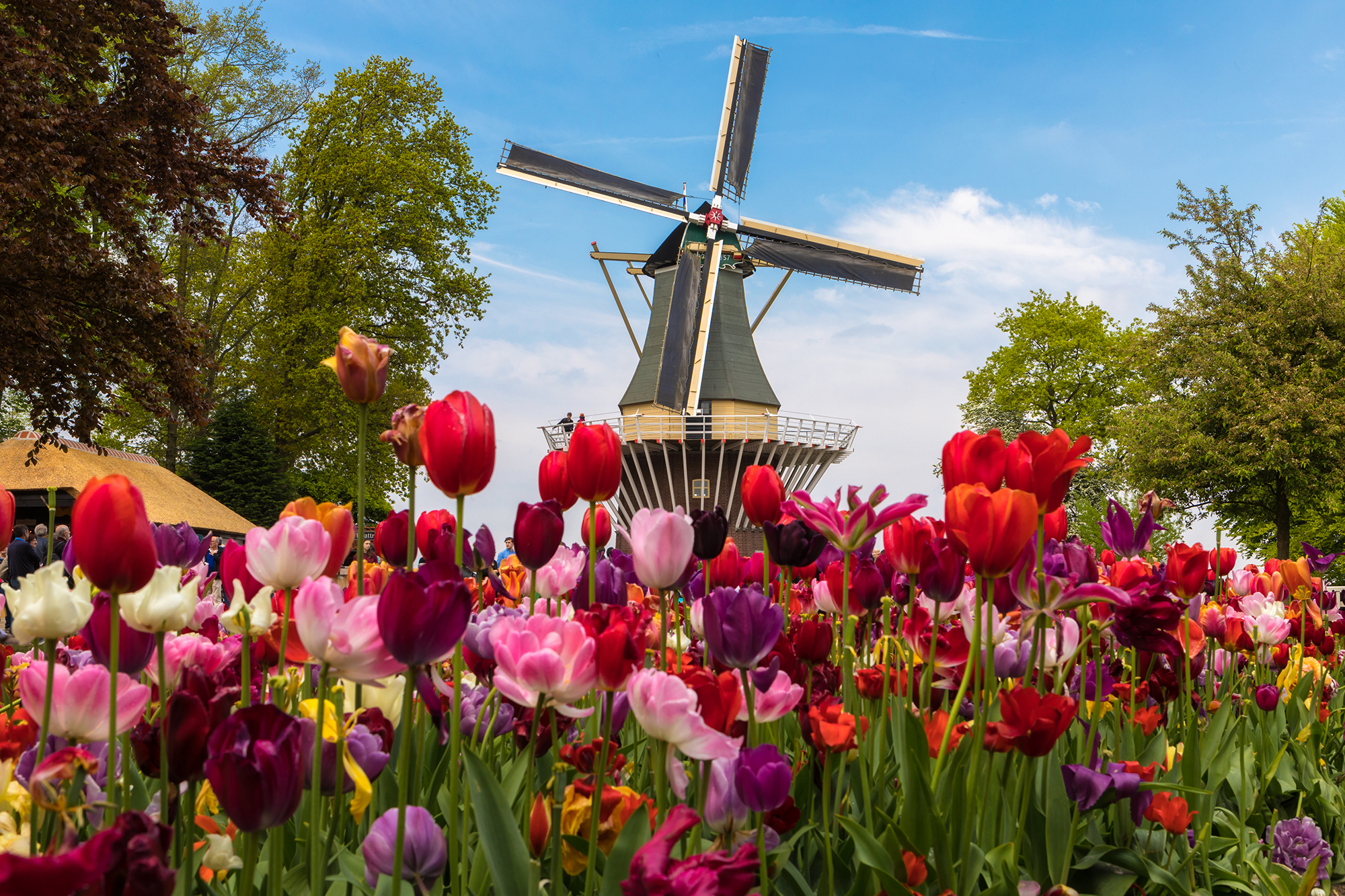
AMSTERDAM. Enjoy a morning of scenic cruising before venturing out in the afternoon on a smaller boat specially designed to glide beneath the many bridges of Amsterdam. Admire the city’s historic harbor and canals, where you’ll see beautiful homes lining the water and the fabled Skinny Bridge. Alternatively, marvel at one of the most impressive public gardens in the world, Keukenhof**, which presents a spectacular display of millions of flowering tulips spread out over 70 acres. Spend time ambling through this legendary garden, open only nine weeks a year and sometimes referred to as the "Garden of Europe." (B,L,D)
**Note: Included on most departures; An alternative tour will operate on sailings that visit Amsterdam outside of Keukenhof’s open dates.
Amsterdam combines the unrivaled beauty of the 17th-century Golden Age city center with plenty of museums and art of the highest order, not to mention a remarkably laid-back atmosphere. It all comes together to make this one of the world's most appealing and offbeat metropolises in the world. Built on a latticework of concentric canals like an aquatic rainbow, Amsterdam is known as the City of Canals—but it's no Venice, content to live on moonlight serenades and former glory. Quite the contrary: on nearly every street here you'll find old and new side by side—quiet corners where time seems to be holding its breath next to streets like neon-lit Kalverstraat, and Red Light ladies strutting by the city's oldest church. Indeed, Amsterdam has as many lovely facets as a 40-carat diamond polished by one of the city's gem cutters. It's certainly a metropolis, but a rather small and very accessible one. Locals tend to refer to it as a big village, albeit one that happens to pack the cultural wallop of a major world destination. There are scores of concerts every day, numerous museums, summertime festivals, and, of course, a legendary year-round party scene. It's pretty much impossible to resist Amsterdam's charms. With 7,000 registered monuments, most of which began as the residences and warehouses of humble merchants, set on 160 man-made canals, and traversed by 1,500 or so bridges, Amsterdam has the largest historical inner city in Europe. Its famous circle of waterways, the grachtengordel, was a 17th-century urban expansion plan for the rich and is a lasting testament to the city’s Golden Age. This town is endearing because of its kinder, gentler nature—but a reputation for championing sex, drugs, and rock ’n’ roll does not alone account for Amsterdam's being one of the most popular destinations in Europe: consider that within a single square mile the city harbors some of the greatest achievements in Western art, from Rembrandt to Van Gogh. Not to mention that this is one of Europe's great walking cities, with so many of its treasures in the untouted details: tiny alleyways barely visible on the map, hidden garden courtyards, shop windows, floating houseboats, hidden hofjes(courtyards with almshouses), sudden vistas of church spires, and gabled roofs that look like so many unframed paintings. And don’t forget that the joy lies in details: elaborate gables and witty gable stones denoting the trade of a previous owner. Keep in mind that those XXX symbols you see all over town are not a mark of the city's triple-X reputation. They're part of Amsterdam's official coat of arms—three St. Andrew's crosses, believed to represent the three dangers that have traditionally plagued the city: flood, fire, and pestilence. The coat's motto ("Valiant, determined, compassionate") was introduced in 1947 by Queen Wilhelmina in remembrance of the 1941 February Strike in Amsterdam—the first time in Europe that non-Jewish people protested against the persecution of Jews by the Nazi regime.
Day 8
DISEMBARKATION – DEPART AMSTERDAM. Disembark the ship and prepare for your flight home. (B)
(B,L,D) – Indicates Breakfast, Lunch, and Dinner are included on this day.
Amsterdam combines the unrivaled beauty of the 17th-century Golden Age city center with plenty of museums and art of the highest order, not to mention a remarkably laid-back atmosphere. It all comes together to make this one of the world's most appealing and offbeat metropolises in the world. Built on a latticework of concentric canals like an aquatic rainbow, Amsterdam is known as the City of Canals—but it's no Venice, content to live on moonlight serenades and former glory. Quite the contrary: on nearly every street here you'll find old and new side by side—quiet corners where time seems to be holding its breath next to streets like neon-lit Kalverstraat, and Red Light ladies strutting by the city's oldest church. Indeed, Amsterdam has as many lovely facets as a 40-carat diamond polished by one of the city's gem cutters. It's certainly a metropolis, but a rather small and very accessible one. Locals tend to refer to it as a big village, albeit one that happens to pack the cultural wallop of a major world destination. There are scores of concerts every day, numerous museums, summertime festivals, and, of course, a legendary year-round party scene. It's pretty much impossible to resist Amsterdam's charms. With 7,000 registered monuments, most of which began as the residences and warehouses of humble merchants, set on 160 man-made canals, and traversed by 1,500 or so bridges, Amsterdam has the largest historical inner city in Europe. Its famous circle of waterways, the grachtengordel, was a 17th-century urban expansion plan for the rich and is a lasting testament to the city’s Golden Age. This town is endearing because of its kinder, gentler nature—but a reputation for championing sex, drugs, and rock ’n’ roll does not alone account for Amsterdam's being one of the most popular destinations in Europe: consider that within a single square mile the city harbors some of the greatest achievements in Western art, from Rembrandt to Van Gogh. Not to mention that this is one of Europe's great walking cities, with so many of its treasures in the untouted details: tiny alleyways barely visible on the map, hidden garden courtyards, shop windows, floating houseboats, hidden hofjes(courtyards with almshouses), sudden vistas of church spires, and gabled roofs that look like so many unframed paintings. And don’t forget that the joy lies in details: elaborate gables and witty gable stones denoting the trade of a previous owner. Keep in mind that those XXX symbols you see all over town are not a mark of the city's triple-X reputation. They're part of Amsterdam's official coat of arms—three St. Andrew's crosses, believed to represent the three dangers that have traditionally plagued the city: flood, fire, and pestilence. The coat's motto ("Valiant, determined, compassionate") was introduced in 1947 by Queen Wilhelmina in remembrance of the 1941 February Strike in Amsterdam—the first time in Europe that non-Jewish people protested against the persecution of Jews by the Nazi regime.

from £3,664 per person
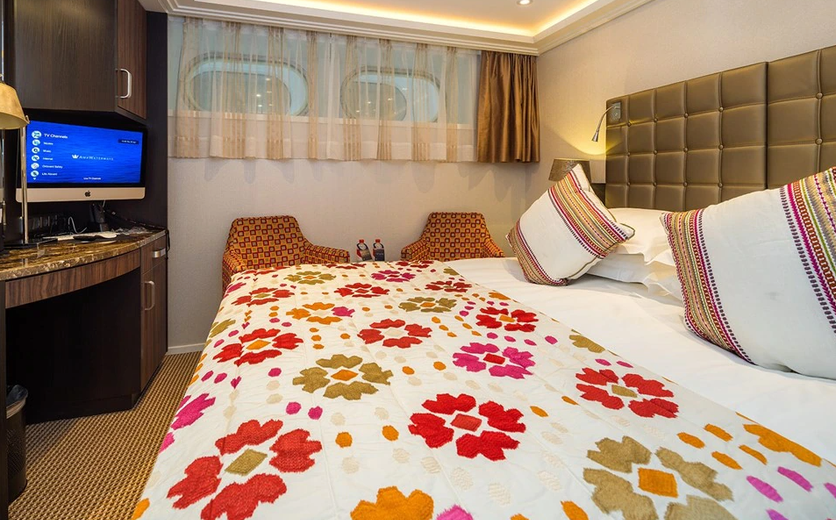
Stateroom Features Include:
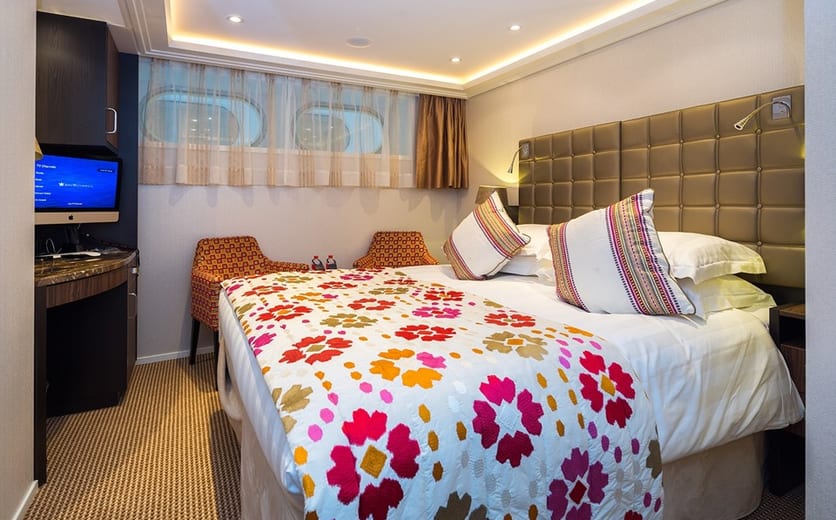
Stateroom Features Include:
from £4,541 per person
from £0 per person
from £3,664 per person
Stateroom Features Include:
Stateroom Features Include:
from £4,541 per person
from £0 per person
 0203 930 4640