Call
Call Enquire
 Search


Menu

Manage my booking

| Sales | |
| Monday - Friday | 09:00 - 20:00 |
| Saturday | 09:00 - 16:00 |
| Sunday | 10:00 - 17:00 |
| Bank Holiday | 10:00 - 16:00 |
| Aftersales | |
| Monday - Friday | 09:00 - 17:30 |
| Bank Holiday | 10:00 - 16:00 |
Speak to a Travel Expert
Call Now!



24 Jun - 15 Jul 2027

21 Nights onboard Star Legend

Water sports toys*

Inclusion package upgrades available on request*

Soft drinks*

Complimentary Dining*

Entertainment*
Not Available
Not Available
Not Available
from
£5,271
per person
Our experts are here to help
Call us today on 0203 930 4640 or enquire online.





 Beyond Inclusive Package*Cruise + Air + Hotel Package*
*Select voyages. T's and C's apply
Day 1
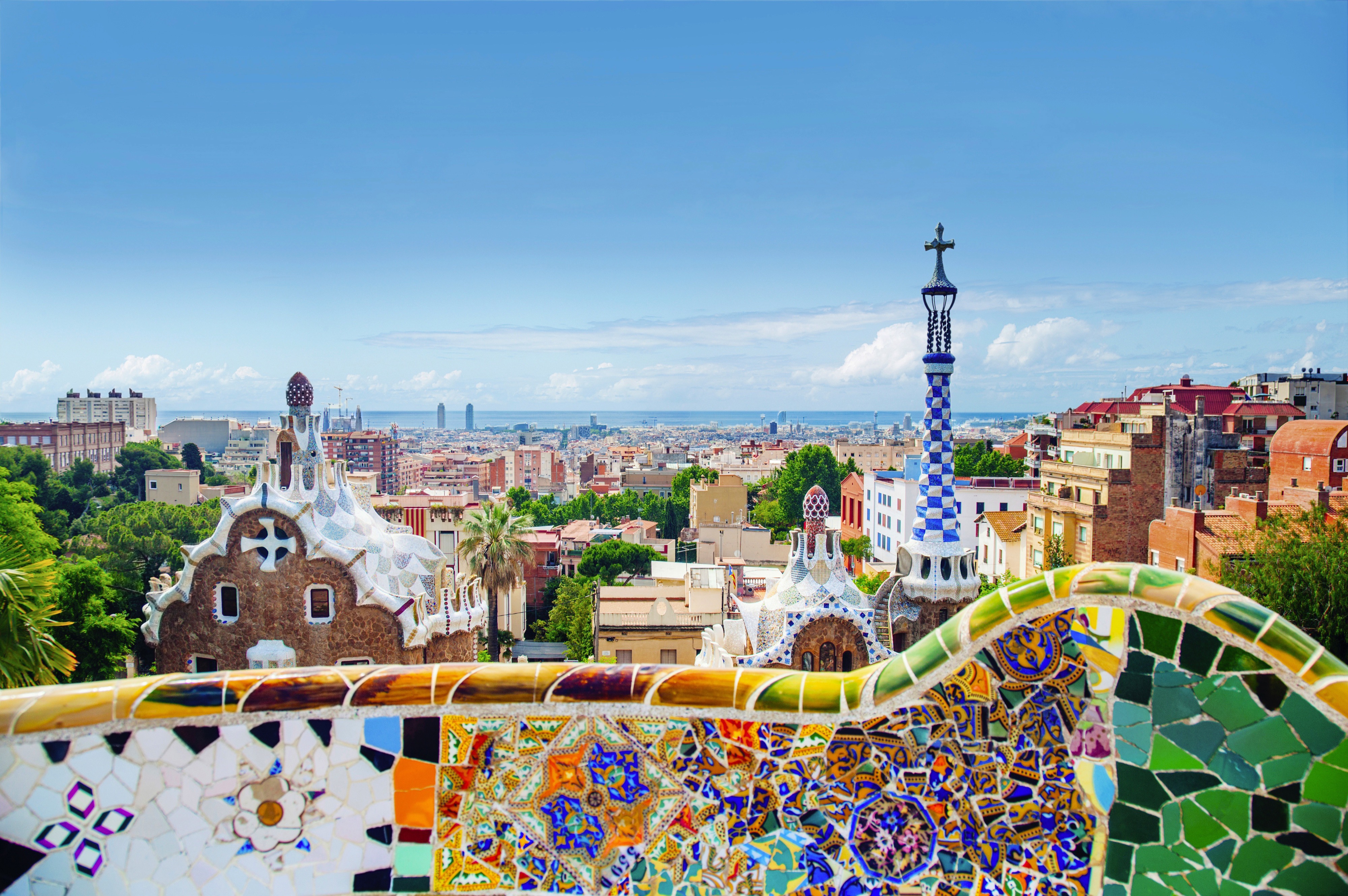
The infinite variety of street life, the nooks and crannies of the medieval Barri Gòtic, the ceramic tile and stained glass of Art Nouveau facades, the art and music, the throb of street life, the food (ah, the food!)—one way or another, Barcelona will find a way to get your full attention. The capital of Catalonia is a banquet for the senses, with its beguiling mix of ancient and modern architecture, tempting cafés and markets, and sun-drenched Mediterranean beaches. A stroll along La Rambla and through waterfront Barceloneta, as well as a tour of Gaudí's majestic Sagrada Famíliaand his other unique creations, are part of a visit to Spain's second-largest city. Modern art museums and chic shops call for attention, too. Barcelona's vibe stays lively well into the night, when you can linger over regional wine and cuisine at buzzing tapas bars.
Day 1
The infinite variety of street life, the nooks and crannies of the medieval Barri Gòtic, the ceramic tile and stained glass of Art Nouveau facades, the art and music, the throb of street life, the food (ah, the food!)—one way or another, Barcelona will find a way to get your full attention. The capital of Catalonia is a banquet for the senses, with its beguiling mix of ancient and modern architecture, tempting cafés and markets, and sun-drenched Mediterranean beaches. A stroll along La Rambla and through waterfront Barceloneta, as well as a tour of Gaudí's majestic Sagrada Famíliaand his other unique creations, are part of a visit to Spain's second-largest city. Modern art museums and chic shops call for attention, too. Barcelona's vibe stays lively well into the night, when you can linger over regional wine and cuisine at buzzing tapas bars.
Day 2
Day 3
The capital of Menorca since 1721, Mahon has a impressive natural deep water harbour, which is one of the largest in the world. This, coupled with its strategic location, has made it a stronghold for many nations throughout history. Mahon has an abundance of historical buildings, the oldest being the Arch of Saint Roc which is all that remains of the wall that once encircled the whole town. The island was occupied by the British during the 18th century and Lord Nelson is thought to have stayed there. Indeed, San Antoni Mansion, located on the north side of the harbour, houses a collection of Nelson memorabilia. The legacy of colonial rule can be seen in the muted Georgian style of some of the buildings, but Mahon still boasts attractive examples of neo-Classical, Baroque and Romanesque architecture. With narrow streets to explore, pleasant shaded squares and welcoming pavement cafés, there is something for everyone to enjoy. Please be aware that most shops in town close for a siesta between 1330 and 1730.
Day 3
The capital of Menorca since 1721, Mahon has a impressive natural deep water harbour, which is one of the largest in the world. This, coupled with its strategic location, has made it a stronghold for many nations throughout history. Mahon has an abundance of historical buildings, the oldest being the Arch of Saint Roc which is all that remains of the wall that once encircled the whole town. The island was occupied by the British during the 18th century and Lord Nelson is thought to have stayed there. Indeed, San Antoni Mansion, located on the north side of the harbour, houses a collection of Nelson memorabilia. The legacy of colonial rule can be seen in the muted Georgian style of some of the buildings, but Mahon still boasts attractive examples of neo-Classical, Baroque and Romanesque architecture. With narrow streets to explore, pleasant shaded squares and welcoming pavement cafés, there is something for everyone to enjoy. Please be aware that most shops in town close for a siesta between 1330 and 1730.
Day 4
Day 4
Day 5
The infinite variety of street life, the nooks and crannies of the medieval Barri Gòtic, the ceramic tile and stained glass of Art Nouveau facades, the art and music, the throb of street life, the food (ah, the food!)—one way or another, Barcelona will find a way to get your full attention. The capital of Catalonia is a banquet for the senses, with its beguiling mix of ancient and modern architecture, tempting cafés and markets, and sun-drenched Mediterranean beaches. A stroll along La Rambla and through waterfront Barceloneta, as well as a tour of Gaudí's majestic Sagrada Famíliaand his other unique creations, are part of a visit to Spain's second-largest city. Modern art museums and chic shops call for attention, too. Barcelona's vibe stays lively well into the night, when you can linger over regional wine and cuisine at buzzing tapas bars.
Day 5
The infinite variety of street life, the nooks and crannies of the medieval Barri Gòtic, the ceramic tile and stained glass of Art Nouveau facades, the art and music, the throb of street life, the food (ah, the food!)—one way or another, Barcelona will find a way to get your full attention. The capital of Catalonia is a banquet for the senses, with its beguiling mix of ancient and modern architecture, tempting cafés and markets, and sun-drenched Mediterranean beaches. A stroll along La Rambla and through waterfront Barceloneta, as well as a tour of Gaudí's majestic Sagrada Famíliaand his other unique creations, are part of a visit to Spain's second-largest city. Modern art museums and chic shops call for attention, too. Barcelona's vibe stays lively well into the night, when you can linger over regional wine and cuisine at buzzing tapas bars.
Day 6
One of the best ways to arrive in Catalonia is by sea, especially via the Costa Brava. This coastline, also known as the Rugged or Wild Coast, stretches from Blanes to the French border. Its name aptly refers to the steep cliff of ancient twisted rocks, which runs its entire length and is bounded inland by the Catalan mountain ranges. The intensity of the coast’s colour, the ruggedness of the rocks and the scent of the plants all combine to add to its attraction. The history of this region is long and varied. Traces can be found of the advanced culture of the Iberians, Greeks, Romans, Visigoths and Arabs. With Wilfred I and the independence of Catalan countries, the Catalan dynasty was born. Later, in 1479, Catalonia became a part of unified Spain following the marriage of Isabel, Queen of Castile, and Fernando, King of Aragon. The port of Palamos, some 36 miles northeast of Barcelona, has been in existence for nearly 700 years thanks to its location on one of the deepest natural bays in the western Mediterranean. The town itself is the southernmost of a series of resorts popular with sun worshippers. For the most part, Palamos has managed to retain some of the charm of a fishing village. The port also serves as a gateway to such inland locations as Girona, the capital of the province. Art lovers may want to visit Figueras, famous for its bizarre Teatre-Museu Dali, the foremost of a series of sites associated with the eccentric surrealist artist, Salvador Dali. If you choose to stay in Palamos, you can enjoy the pleasant atmosphere of the town or spend some time at a nearby beach. The town has a long seagoing tradition and busy harbour. The fish auction, prompted by the arrival of the fishing boats, is a spectacle worth seeing. The Fishing Museum illustrates the history and the life of the families who live off the sea.
Day 6
One of the best ways to arrive in Catalonia is by sea, especially via the Costa Brava. This coastline, also known as the Rugged or Wild Coast, stretches from Blanes to the French border. Its name aptly refers to the steep cliff of ancient twisted rocks, which runs its entire length and is bounded inland by the Catalan mountain ranges. The intensity of the coast’s colour, the ruggedness of the rocks and the scent of the plants all combine to add to its attraction. The history of this region is long and varied. Traces can be found of the advanced culture of the Iberians, Greeks, Romans, Visigoths and Arabs. With Wilfred I and the independence of Catalan countries, the Catalan dynasty was born. Later, in 1479, Catalonia became a part of unified Spain following the marriage of Isabel, Queen of Castile, and Fernando, King of Aragon. The port of Palamos, some 36 miles northeast of Barcelona, has been in existence for nearly 700 years thanks to its location on one of the deepest natural bays in the western Mediterranean. The town itself is the southernmost of a series of resorts popular with sun worshippers. For the most part, Palamos has managed to retain some of the charm of a fishing village. The port also serves as a gateway to such inland locations as Girona, the capital of the province. Art lovers may want to visit Figueras, famous for its bizarre Teatre-Museu Dali, the foremost of a series of sites associated with the eccentric surrealist artist, Salvador Dali. If you choose to stay in Palamos, you can enjoy the pleasant atmosphere of the town or spend some time at a nearby beach. The town has a long seagoing tradition and busy harbour. The fish auction, prompted by the arrival of the fishing boats, is a spectacle worth seeing. The Fishing Museum illustrates the history and the life of the families who live off the sea.
Day 7
Day 7
Day 8
On one of the best stretches of the Mediterranean, this classic luxury destination is one of the most sought-after addresses in the world. With all the high-rise towers you have to look hard to find the Belle Époque grace of yesteryear. But if you head to the town's great 1864 landmark Hôtel de Paris—still a veritable crossroads of the buffed and befurred Euro-gentry—or enjoy a grand bouffe at its famous Louis XV restaurant, or attend the opera, or visit the ballrooms of the casino, you may still be able to conjure up Monaco's elegant past. Prince Albert II, a political science graduate from Amherst College, traces his ancestry to Otto Canella, who was born in 1070. The Grimaldi dynasty began with Otto's great-great-great-grandson, Francesco Grimaldi, also known as Frank the Rogue. Expelled from Genoa, Frank and his cronies disguised themselves as monks and in 1297 seized the fortified medieval town known today as Le Rocher (the Rock). Except for a short break under Napoléon, the Grimaldis have been here ever since, which makes them the oldest reigning family in Europe. In the 1850s a Grimaldi named Charles III made a decision that turned the Rock into a giant blue chip. Needing revenue but not wanting to impose additional taxes on his subjects, he contracted with a company to open a gambling facility. The first spin of the roulette wheel was on December 14, 1856. There was no easy way to reach Monaco then—no carriage roads or railroads—so no one came. Between March 15 and March 20, 1857, one person entered the casino—and won two francs. In 1868, however, the railroad reached Monaco, and it was filled with Englishmen who came to escape the London fog. The effects were immediate. Profits were so great that Charles eventually abolished all direct taxes. Almost overnight, a threadbare principality became an elegant watering hole for European society. Dukes (and their mistresses) and duchesses (and their gigolos) danced and dined their way through a world of spinning roulette wheels and bubbling champagne—preening themselves for nights at the opera, where such artists as Vaslav Nijinsky, Sarah Bernhardt, and Enrico Caruso came to perform. Along with the tax system, its sensational position on a broad, steep peninsula that bulges into the Mediterranean—its harbor sparkling with luxury cruisers, its posh mansions angling awnings toward the nearly perpetual sun—continues to draw the rich and famous. One of the latest French celebrities to declare himself "Monégasque," thus giving up his French passport, is superchef Alain Ducasse, who said that he made the choice out of affection for Monaco rather than tax reasons. Pleasure boats vie with luxury cruisers in their brash beauty and Titanic scale, and teams of handsome young men—themselves dyed blond and tanned to match—scour and polish every gleaming surface. As you might expect, all this glitz doesn't come cheap. Eating is expensive, and even the most modest hotels cost more here than in nearby Nice or Menton. As for taxis, they don't even have meters so you are completely at the driver's mercy (with prices skyrocketing during events such as the Grand Prix). For the frugal, Monaco is the ultimate day-trip, although parking is as coveted as a room with a view. At the very least you can afford a coffee at Starbucks. The harbor district, known as La Condamine, connects the new quarter, officially known as Monte Carlo with Monaco-Ville (or Le Rocher), a medieval town on the Rock, topped by the palace, the cathedral, and the Oceanography Museum. Have no fear that you'll need to climb countless steps to get to Monaco-Ville, as there are plenty of elevators and escalators climbing the steep cliffs. But shuttling between the lovely casino grounds of Monte Carlo and Old Monaco, separated by a vast port, is a daunting proposition for ordinary mortals without wings, so hop on the No. 1 bus from Saint Roman, or No. 2 from the Jardin Exotique - Both stop at Place du Casino and come up to Monaco Ville.
Day 8
On one of the best stretches of the Mediterranean, this classic luxury destination is one of the most sought-after addresses in the world. With all the high-rise towers you have to look hard to find the Belle Époque grace of yesteryear. But if you head to the town's great 1864 landmark Hôtel de Paris—still a veritable crossroads of the buffed and befurred Euro-gentry—or enjoy a grand bouffe at its famous Louis XV restaurant, or attend the opera, or visit the ballrooms of the casino, you may still be able to conjure up Monaco's elegant past. Prince Albert II, a political science graduate from Amherst College, traces his ancestry to Otto Canella, who was born in 1070. The Grimaldi dynasty began with Otto's great-great-great-grandson, Francesco Grimaldi, also known as Frank the Rogue. Expelled from Genoa, Frank and his cronies disguised themselves as monks and in 1297 seized the fortified medieval town known today as Le Rocher (the Rock). Except for a short break under Napoléon, the Grimaldis have been here ever since, which makes them the oldest reigning family in Europe. In the 1850s a Grimaldi named Charles III made a decision that turned the Rock into a giant blue chip. Needing revenue but not wanting to impose additional taxes on his subjects, he contracted with a company to open a gambling facility. The first spin of the roulette wheel was on December 14, 1856. There was no easy way to reach Monaco then—no carriage roads or railroads—so no one came. Between March 15 and March 20, 1857, one person entered the casino—and won two francs. In 1868, however, the railroad reached Monaco, and it was filled with Englishmen who came to escape the London fog. The effects were immediate. Profits were so great that Charles eventually abolished all direct taxes. Almost overnight, a threadbare principality became an elegant watering hole for European society. Dukes (and their mistresses) and duchesses (and their gigolos) danced and dined their way through a world of spinning roulette wheels and bubbling champagne—preening themselves for nights at the opera, where such artists as Vaslav Nijinsky, Sarah Bernhardt, and Enrico Caruso came to perform. Along with the tax system, its sensational position on a broad, steep peninsula that bulges into the Mediterranean—its harbor sparkling with luxury cruisers, its posh mansions angling awnings toward the nearly perpetual sun—continues to draw the rich and famous. One of the latest French celebrities to declare himself "Monégasque," thus giving up his French passport, is superchef Alain Ducasse, who said that he made the choice out of affection for Monaco rather than tax reasons. Pleasure boats vie with luxury cruisers in their brash beauty and Titanic scale, and teams of handsome young men—themselves dyed blond and tanned to match—scour and polish every gleaming surface. As you might expect, all this glitz doesn't come cheap. Eating is expensive, and even the most modest hotels cost more here than in nearby Nice or Menton. As for taxis, they don't even have meters so you are completely at the driver's mercy (with prices skyrocketing during events such as the Grand Prix). For the frugal, Monaco is the ultimate day-trip, although parking is as coveted as a room with a view. At the very least you can afford a coffee at Starbucks. The harbor district, known as La Condamine, connects the new quarter, officially known as Monte Carlo with Monaco-Ville (or Le Rocher), a medieval town on the Rock, topped by the palace, the cathedral, and the Oceanography Museum. Have no fear that you'll need to climb countless steps to get to Monaco-Ville, as there are plenty of elevators and escalators climbing the steep cliffs. But shuttling between the lovely casino grounds of Monte Carlo and Old Monaco, separated by a vast port, is a daunting proposition for ordinary mortals without wings, so hop on the No. 1 bus from Saint Roman, or No. 2 from the Jardin Exotique - Both stop at Place du Casino and come up to Monaco Ville.
Day 9
Cannes is pampered with the luxurious year-round climate that has made it one of the most popular resorts in Europe. Cannes was an important sentinel site for the monks who established themselves on Île St-Honorat in the Middle Ages. Its bay served as nothing more than a fishing port until in 1834 an English aristocrat, Lord Brougham, fell in love with the site during an emergency stopover with a sick daughter. He had a home built here and returned every winter for a sun cure—a ritual quickly picked up by his peers. Between the popularity of Le Train Blue transporting wealthy passengers from Calais, and the introduction in 1936 of France's first paid holidays, Cannes became the destination, a tasteful and expensive breeding ground for the upper-upscale.Cannes has been further glamorized by the ongoing success of its annual film festival, as famous as Hollywood's Academy Awards. About the closest many of us will get to feeling like a film star is a stroll here along La Croisette, the iconic promenade that gracefully curves the wave-washed sand coastline, peppered with chic restaurants and prestigious private beaches. This is precisely the sort of place for which the French invented the verb flâner (to dawdle, saunter): strewn with palm trees and poseurs, its fancy boutiques and status-symbol grand hotels—including the Carlton, the legendary backdrop to Grace Kelly in To Catch a Thief —all vying for the custom of the Louis Vuitton set. This legend is, to many, the heart and soul of the Côte d'Azur.
Day 9
Cannes is pampered with the luxurious year-round climate that has made it one of the most popular resorts in Europe. Cannes was an important sentinel site for the monks who established themselves on Île St-Honorat in the Middle Ages. Its bay served as nothing more than a fishing port until in 1834 an English aristocrat, Lord Brougham, fell in love with the site during an emergency stopover with a sick daughter. He had a home built here and returned every winter for a sun cure—a ritual quickly picked up by his peers. Between the popularity of Le Train Blue transporting wealthy passengers from Calais, and the introduction in 1936 of France's first paid holidays, Cannes became the destination, a tasteful and expensive breeding ground for the upper-upscale.Cannes has been further glamorized by the ongoing success of its annual film festival, as famous as Hollywood's Academy Awards. About the closest many of us will get to feeling like a film star is a stroll here along La Croisette, the iconic promenade that gracefully curves the wave-washed sand coastline, peppered with chic restaurants and prestigious private beaches. This is precisely the sort of place for which the French invented the verb flâner (to dawdle, saunter): strewn with palm trees and poseurs, its fancy boutiques and status-symbol grand hotels—including the Carlton, the legendary backdrop to Grace Kelly in To Catch a Thief —all vying for the custom of the Louis Vuitton set. This legend is, to many, the heart and soul of the Côte d'Azur.
Day 10
One of the most photographed villages along the coast, with a decidedly romantic and affluent aura, Portofino has long been a popular destination for the rich and famous. Once an ancient Roman colony and taken by the Republic of Genoa in 1229, it’s also been ruled by the French, English, Spanish, and Austrians, as well as by marauding bands of 16th-century pirates. Elite British tourists first flocked to the lush harbor in the mid-1800s. Some of Europe's wealthiest drop anchor in Portofino in summer, but they stay out of sight by day, appearing in the evening after buses and boats have carried off the day-trippers.There's not actually much to do in Portofino other than stroll around the wee harbor, see the castle, walk to Punta del Capo, browse at the pricey boutiques, and sip a coffee while people-watching. However, weaving through picture-perfect cliffside gardens and gazing at yachts framed by the sapphire Ligurian Sea and the cliffs of Santa Margherita can make for quite a relaxing afternoon. There are also several tame, photo-friendly hikes into the hills to nearby villages.Unless you're traveling on a deluxe budget, you may want to stay in Camogli or Santa Margherita Ligure rather than at one of Portofino's few very expensive hotels. Restaurants and cafés are good but also pricey (don't expect to have a beer here for much under €10).
Day 10
One of the most photographed villages along the coast, with a decidedly romantic and affluent aura, Portofino has long been a popular destination for the rich and famous. Once an ancient Roman colony and taken by the Republic of Genoa in 1229, it’s also been ruled by the French, English, Spanish, and Austrians, as well as by marauding bands of 16th-century pirates. Elite British tourists first flocked to the lush harbor in the mid-1800s. Some of Europe's wealthiest drop anchor in Portofino in summer, but they stay out of sight by day, appearing in the evening after buses and boats have carried off the day-trippers.There's not actually much to do in Portofino other than stroll around the wee harbor, see the castle, walk to Punta del Capo, browse at the pricey boutiques, and sip a coffee while people-watching. However, weaving through picture-perfect cliffside gardens and gazing at yachts framed by the sapphire Ligurian Sea and the cliffs of Santa Margherita can make for quite a relaxing afternoon. There are also several tame, photo-friendly hikes into the hills to nearby villages.Unless you're traveling on a deluxe budget, you may want to stay in Camogli or Santa Margherita Ligure rather than at one of Portofino's few very expensive hotels. Restaurants and cafés are good but also pricey (don't expect to have a beer here for much under €10).
Day 11
Elba is the Tuscan archipelago's largest island, but it resembles nearby verdant Corsica more than it does its rocky Italian sisters, thanks to a network of underground springs that keep it lush and green. It's this combination of semitropical vegetation and dramatic mountain scenery—unusual in the Mediterranean—that has made Elba so prized for so long, and the island's uniqueness continues to draw boatloads of visitors throughout the warm months. A car is very useful for getting around the island, but public buses stop at most towns several times a day; the tourist office has timetables.
Day 11
Elba is the Tuscan archipelago's largest island, but it resembles nearby verdant Corsica more than it does its rocky Italian sisters, thanks to a network of underground springs that keep it lush and green. It's this combination of semitropical vegetation and dramatic mountain scenery—unusual in the Mediterranean—that has made Elba so prized for so long, and the island's uniqueness continues to draw boatloads of visitors throughout the warm months. A car is very useful for getting around the island, but public buses stop at most towns several times a day; the tourist office has timetables.
Day 12
Rome, Italy, the Eternal City, is a stunning blend of ancient history and vibrant modern life. Iconic landmarks like the Colosseum, Vatican City, and the Pantheon showcase its glorious past. Cobblestone streets lead to charming piazzas, bustling markets, and world-renowned museums. Rome's culinary scene delights with traditional Italian cuisine and lively cafes. The city's rich culture, impressive architecture, and warm, welcoming atmosphere make it an unforgettable destination for travellers.
Day 12
Rome, Italy, the Eternal City, is a stunning blend of ancient history and vibrant modern life. Iconic landmarks like the Colosseum, Vatican City, and the Pantheon showcase its glorious past. Cobblestone streets lead to charming piazzas, bustling markets, and world-renowned museums. Rome's culinary scene delights with traditional Italian cuisine and lively cafes. The city's rich culture, impressive architecture, and warm, welcoming atmosphere make it an unforgettable destination for travellers.
Day 13
Day 13
Day 14
The largest and most developed of the Aeolians, Lipari welcomes you with distinctive pastel-color houses. Fields of spiky agaves dot the northernmost tip of the island, Acquacalda, indented with pumice and obsidian quarries. In the west is San Calogero, where you can explore hot springs and mud baths. From the red-lava base of the island rises a plateau crowned with a 16th-century castle and a 17th-century cathedral.
Day 14
The largest and most developed of the Aeolians, Lipari welcomes you with distinctive pastel-color houses. Fields of spiky agaves dot the northernmost tip of the island, Acquacalda, indented with pumice and obsidian quarries. In the west is San Calogero, where you can explore hot springs and mud baths. From the red-lava base of the island rises a plateau crowned with a 16th-century castle and a 17th-century cathedral.
Day 15
Once the intellectual capital of southern Europe, Palermo has always been at the crossroads of civilization. Favorably situated on a crescent-shaped bay at the foot of Monte Pellegrino, it has attracted almost every culture touching the Mediterranean world. To Palermo's credit, it has absorbed these diverse cultures into a unique personality that is at once Arab and Christian, Byzantine and Roman, Norman and Italian. The city's heritage encompasses all of Sicily's varied ages, but its distinctive aspect is its Arab-Norman identity, an improbable marriage that, mixed in with Byzantine and Jewish elements, created some resplendent works of art. No less noteworthy than the architecture is Palermo's chaotic vitality, on display at some of Italy's most vibrant outdoor markets, public squares, street bazaars, and food vendors, and above all in its grand climax of Italy's most spectacular passeggiata (the leisurely social stroll along the principal thoroughfare).
Day 15
Once the intellectual capital of southern Europe, Palermo has always been at the crossroads of civilization. Favorably situated on a crescent-shaped bay at the foot of Monte Pellegrino, it has attracted almost every culture touching the Mediterranean world. To Palermo's credit, it has absorbed these diverse cultures into a unique personality that is at once Arab and Christian, Byzantine and Roman, Norman and Italian. The city's heritage encompasses all of Sicily's varied ages, but its distinctive aspect is its Arab-Norman identity, an improbable marriage that, mixed in with Byzantine and Jewish elements, created some resplendent works of art. No less noteworthy than the architecture is Palermo's chaotic vitality, on display at some of Italy's most vibrant outdoor markets, public squares, street bazaars, and food vendors, and above all in its grand climax of Italy's most spectacular passeggiata (the leisurely social stroll along the principal thoroughfare).
Day 16
Trapani, the most important town on Sicily’s west coast, lies below the headland of Mount Erice and offers stunning views of the Egadi Islands on a clear day. Trapani’s Old District occupies a scimitarshaped promontory between the open sea on the north and the salt marshes to the south. The ancient industry of extracting salt from the marshes has recently been revived, and it is documented in the Museo delle Saline. In addition to the salt marshes,Trapani’s other interesting environs include the beautiful little hill town of Erice, the promontory of Capo San Vito stretching north beyond the splendid headland of Monte Cofano, the lovely island of Motya and the town of Marsala. Trips farther afield will take you to the magnificent site of Segesta or the Egadi Islands, reached by boat or hydrofoil from Trapani Port.
Day 16
Trapani, the most important town on Sicily’s west coast, lies below the headland of Mount Erice and offers stunning views of the Egadi Islands on a clear day. Trapani’s Old District occupies a scimitarshaped promontory between the open sea on the north and the salt marshes to the south. The ancient industry of extracting salt from the marshes has recently been revived, and it is documented in the Museo delle Saline. In addition to the salt marshes,Trapani’s other interesting environs include the beautiful little hill town of Erice, the promontory of Capo San Vito stretching north beyond the splendid headland of Monte Cofano, the lovely island of Motya and the town of Marsala. Trips farther afield will take you to the magnificent site of Segesta or the Egadi Islands, reached by boat or hydrofoil from Trapani Port.
Day 17
Day 17
Day 18
Malta's capital, the minicity of Valletta, has ornate palaces and museums protected by massive fortifications of honey-color limestone. Houses along the narrow streets have overhanging wooden balconies for people-watching from indoors. Generations ago they gave housebound women a window on the world of the street. The main entrance to town is through the City Gate (where all bus routes end), which leads onto Triq Repubblika (Republic Street), the spine of the grid-pattern city and the main shopping street. Triq Mercante (Merchant Street) parallels Repubblika to the east and is also good for strolling. From these two streets, cross streets descend toward the water; some are stepped. Valletta's compactness makes it ideal to explore on foot. City Gate and the upper part of Valletta are experiencing vast redevelopment that includes a new Parliament Building and open-air performance venue. The complex, completed mid-2013, has numerous pedestrian detours in place along with building noise and dust. Before setting out along Republic Street, stop at the tourist information office on Merchant Street for maps and brochures.
Day 18
Malta's capital, the minicity of Valletta, has ornate palaces and museums protected by massive fortifications of honey-color limestone. Houses along the narrow streets have overhanging wooden balconies for people-watching from indoors. Generations ago they gave housebound women a window on the world of the street. The main entrance to town is through the City Gate (where all bus routes end), which leads onto Triq Repubblika (Republic Street), the spine of the grid-pattern city and the main shopping street. Triq Mercante (Merchant Street) parallels Repubblika to the east and is also good for strolling. From these two streets, cross streets descend toward the water; some are stepped. Valletta's compactness makes it ideal to explore on foot. City Gate and the upper part of Valletta are experiencing vast redevelopment that includes a new Parliament Building and open-air performance venue. The complex, completed mid-2013, has numerous pedestrian detours in place along with building noise and dust. Before setting out along Republic Street, stop at the tourist information office on Merchant Street for maps and brochures.
Day 19
Siracusa, known to English speakers as Syracuse, is a wonder to behold. One of the great ancient capitals of Western civilization, the city was founded in 734 BC by Greek colonists from Corinth and soon grew to rival, and even surpass, Athens in splendor and power. It became the largest, wealthiest city-state in the West and a bulwark of Greek civilization. Although Siracusa lived under tyranny, rulers such as Dionysius filled their courts with Greeks of the highest cultural stature—among them the playwrights Aeschylus and Euripides, and the philosopher Plato. The Athenians, who didn't welcome Siracusa's rise, set out to conquer Sicily, but the natives outsmarted them in what was one of the greatest military campaigns in ancient history (413 BC). The city continued to prosper until it was conquered two centuries later by the Romans.Present-day Siracusa still has some of the finest examples of Baroque art and architecture; dramatic Greek and Roman ruins; and a Duomo that's the stuff of legend—a microcosm of the city's entire history in one building. The modern city also has a wonderful, lively, Baroque old town worthy of extensive exploration, as well as pleasant piazzas, outdoor cafés and bars, and a wide assortment of excellent seafood. There are essentially two areas to explore in Siracusa: the Parco Archeologico (Archaeological Zone), on the mainland; and the island of Ortygia, the ancient city first inhabited by the Greeks, which juts out into the Ionian Sea and is connected to the mainland by two small bridges. Ortygia is becoming increasingly popular with tourists, and is starting to lose its old-fashioned charm in favor of modern boutiques.Siracusa's old nucleus of Ortygia, a compact area, is a pleasure to amble around without getting unduly tired. In contrast, mainland Siracusa is a grid of wider avenues. At the northern end of Corso Gelone, above Viale Paolo Orsi, the orderly grid gives way to the ancient quarter of Neapolis, where the sprawling Parco Archeologico is accessible from Viale Teracati (an extension of Corso Gelone). East of Viale Teracati, about a 10-minute walk from the Parco Archeologico, the district of Tyche holds the archaeological museum and the church and catacombs of San Giovanni, both off Viale Teocrito (drive or take a taxi or city bus from Ortygia). Coming from the train station, it's a 15-minute trudge to Ortygia along Via Francesco Crispi and Corso Umberto. If you're not up for that, take one of the free electric buses leaving every 10 minutes from the bus station around the corner.
Day 19
Siracusa, known to English speakers as Syracuse, is a wonder to behold. One of the great ancient capitals of Western civilization, the city was founded in 734 BC by Greek colonists from Corinth and soon grew to rival, and even surpass, Athens in splendor and power. It became the largest, wealthiest city-state in the West and a bulwark of Greek civilization. Although Siracusa lived under tyranny, rulers such as Dionysius filled their courts with Greeks of the highest cultural stature—among them the playwrights Aeschylus and Euripides, and the philosopher Plato. The Athenians, who didn't welcome Siracusa's rise, set out to conquer Sicily, but the natives outsmarted them in what was one of the greatest military campaigns in ancient history (413 BC). The city continued to prosper until it was conquered two centuries later by the Romans.Present-day Siracusa still has some of the finest examples of Baroque art and architecture; dramatic Greek and Roman ruins; and a Duomo that's the stuff of legend—a microcosm of the city's entire history in one building. The modern city also has a wonderful, lively, Baroque old town worthy of extensive exploration, as well as pleasant piazzas, outdoor cafés and bars, and a wide assortment of excellent seafood. There are essentially two areas to explore in Siracusa: the Parco Archeologico (Archaeological Zone), on the mainland; and the island of Ortygia, the ancient city first inhabited by the Greeks, which juts out into the Ionian Sea and is connected to the mainland by two small bridges. Ortygia is becoming increasingly popular with tourists, and is starting to lose its old-fashioned charm in favor of modern boutiques.Siracusa's old nucleus of Ortygia, a compact area, is a pleasure to amble around without getting unduly tired. In contrast, mainland Siracusa is a grid of wider avenues. At the northern end of Corso Gelone, above Viale Paolo Orsi, the orderly grid gives way to the ancient quarter of Neapolis, where the sprawling Parco Archeologico is accessible from Viale Teracati (an extension of Corso Gelone). East of Viale Teracati, about a 10-minute walk from the Parco Archeologico, the district of Tyche holds the archaeological museum and the church and catacombs of San Giovanni, both off Viale Teocrito (drive or take a taxi or city bus from Ortygia). Coming from the train station, it's a 15-minute trudge to Ortygia along Via Francesco Crispi and Corso Umberto. If you're not up for that, take one of the free electric buses leaving every 10 minutes from the bus station around the corner.
Day 20
Day 20
Day 20
Home to the Museo Regionale of Messina, known for featuring two of Caravaggio's paintings, the city is also famous for having been the capital of the ancient kingdom of Sicily.
Day 20
Home to the Museo Regionale of Messina, known for featuring two of Caravaggio's paintings, the city is also famous for having been the capital of the ancient kingdom of Sicily.
Day 21
Sorrento may have become a jumping-off point for visitors to Pompeii, Capri, and Amalfi, but you can find countless reasons to love it for itself. The Sorrentine people are fair-minded and hardworking, bubbling with life and warmth. The tuff cliff on which the town rests is spread over the bay, absorbing sunlight, while orange and lemon trees waft their perfume in spring. Winding along a cliff above a small beach and two harbors, the town is split in two by a narrow ravine formed by a former mountain stream. To the east, dozens of hotels line busy Via Correale along the cliff—many have "grand" included in their names, and some indeed still are. To the west, however, is the historic sector, which still enchants. It's a relatively flat area, with winding, stone-paved lanes bordered by balconied buildings, some joined by medieval stone arches. The central piazza is named after the poet Torquato Tasso, born here in 1544. This part of town is a delightful place to walk through. Craftspeople are often at work in their stalls and shops and are happy to let you watch; in fact, that's the point. Music spots and bars cluster in the side streets near Piazza Tasso.
Day 21
Sorrento may have become a jumping-off point for visitors to Pompeii, Capri, and Amalfi, but you can find countless reasons to love it for itself. The Sorrentine people are fair-minded and hardworking, bubbling with life and warmth. The tuff cliff on which the town rests is spread over the bay, absorbing sunlight, while orange and lemon trees waft their perfume in spring. Winding along a cliff above a small beach and two harbors, the town is split in two by a narrow ravine formed by a former mountain stream. To the east, dozens of hotels line busy Via Correale along the cliff—many have "grand" included in their names, and some indeed still are. To the west, however, is the historic sector, which still enchants. It's a relatively flat area, with winding, stone-paved lanes bordered by balconied buildings, some joined by medieval stone arches. The central piazza is named after the poet Torquato Tasso, born here in 1544. This part of town is a delightful place to walk through. Craftspeople are often at work in their stalls and shops and are happy to let you watch; in fact, that's the point. Music spots and bars cluster in the side streets near Piazza Tasso.
Day 22
Rome, Italy, the Eternal City, is a stunning blend of ancient history and vibrant modern life. Iconic landmarks like the Colosseum, Vatican City, and the Pantheon showcase its glorious past. Cobblestone streets lead to charming piazzas, bustling markets, and world-renowned museums. Rome's culinary scene delights with traditional Italian cuisine and lively cafes. The city's rich culture, impressive architecture, and warm, welcoming atmosphere make it an unforgettable destination for travellers.
Day 22
Rome, Italy, the Eternal City, is a stunning blend of ancient history and vibrant modern life. Iconic landmarks like the Colosseum, Vatican City, and the Pantheon showcase its glorious past. Cobblestone streets lead to charming piazzas, bustling markets, and world-renowned museums. Rome's culinary scene delights with traditional Italian cuisine and lively cafes. The city's rich culture, impressive architecture, and warm, welcoming atmosphere make it an unforgettable destination for travellers.

from £5,271 per person
Stylish comfort and ocean views welcome you in 277 square feet. Your queen bed (which can be separated as twins if you prefer) features luxurious Egyptian cotton linens. Enjoy a luxurious soak in your full-size tub or an invigorating shower, then wrap up in your waffle-weave robe and slippers, savor a treat from the fresh fruit bowl, or simply stretch out and enjoy the fresh flowers.
Newly Redesigned Restrooms
We reimagined our restrooms to provide you a private oasis within your own room.
Amenities
Stylish comfort and ocean views welcome you in 277 square feet. Your queen bed (which can be separated as twins if you prefer) features luxurious Egyptian cotton linens. Enjoy a luxurious soak in your full-size tub or an invigorating shower, then wrap up in your waffle-weave robe and slippers, savour a treat from the fresh fruit bowl, or simply stretch out and enjoy the fresh flowers.
Newly Redesigned Restrooms
We reimagined our restrooms to provide you a private oasis within your own room.
Amenities
Stylish comfort and ocean views welcome you in 277 square feet. Your queen bed (which can be separated as twins if you prefer) features luxurious Egyptian cotton linens. Enjoy a luxurious soak in your full-size tub or an invigorating shower, then wrap up in your waffle-weave robe and slippers, savour a treat from the fresh fruit bowl, or simply stretch out and enjoy the fresh flowers.
Newly Redesigned Restrooms
We reimagined our restrooms to provide you a private oasis within your own room.
Amenities
Stylish comfort and ocean views welcome you in 277 square feet. Your queen bed (which can be separated as twins if you prefer) features luxurious Egyptian cotton linens. Enjoy a luxurious soak in your full-size tub or an invigorating shower, then wrap up in your waffle-weave robe and slippers, savor a treat from the fresh fruit bowl, or simply stretch out and enjoy the fresh flowers.
Newly Redesigned Restrooms
We reimagined our restrooms to provide you a private oasis within your own room.
Amenities
As soon as you walk through the door, you’re greeted with an open living area for a more welcoming entrance. Drift off to sleep by the window in your queen bed as you watch the same stars that sailors used to navigate the seas hundreds of years ago.
Newly Redesigned Restrooms
We reimagined our restrooms to provide you a private oasis within your own room.
Amenities
Stylish comfort and ocean views welcome you in 277 square feet. Your queen bed (which can be separated as twins if you prefer) features luxurious Egyptian cotton linens. Enjoy a luxurious soak in your full-size tub or an invigorating shower, then wrap up in your waffle-weave robe and slippers, savour a treat from the fresh fruit bowl, or simply stretch out and enjoy the fresh flowers.
Newly Redesigned Restrooms
We reimagined our restrooms to provide you a private oasis within your own room.
Amenities
Stylish comfort and ocean views welcome you in 277 square feet. Your queen bed (which can be separated as twins if you prefer) features luxurious Egyptian cotton linens. Enjoy a luxurious soak in your full-size tub or an invigorating shower, then wrap up in your waffle-weave robe and slippers, savour a treat from the fresh fruit bowl, or simply stretch out and enjoy the fresh flowers.
Newly Redesigned Restrooms
We reimagined our restrooms to provide you a private oasis within your own room.
Amenities
As soon as you walk through the door, you’re greeted with an open living area for a more welcoming entrance. Drift off to sleep by the window in your queen bed as you watch the same stars that sailors used to navigate the seas hundreds of years ago.
Newly Redesigned Restrooms
We reimagined our restrooms to provide you a private oasis within your own room.
Amenities
As soon as you walk through the door, you’re greeted with an open living area for a more welcoming entrance. Drift off to sleep by the window in your queen bed as you watch the same stars that sailors used to navigate the seas hundreds of years ago.
Newly Redesigned Restrooms
We reimagined our restrooms to provide you a private oasis within your own room.
Amenities
Brand new Deluxe Suites welcome you with 468 square feet of casually elegant living space and an ocean viewing French balcony. All these suites feature 3rd berths, and a sleep-inducing queen bed easily converted to twins.
Newly Redesigned Restrooms
We reimagined our restrooms to provide you a private oasis within your own room.
Amenities
Relax in 400 to 530 spacious square feet. Your living area offers beautiful views from the forward-facing window and French doors onto your private veranda. Two spacious closets give you plenty of room to unpack.
Newly Redesigned Restrooms
We reimagined our restrooms to provide you a private oasis within your own room.
Amenities
These rooms represent a nod to the sailing tradition of porthole windows. And while sailors might have had cramped quarters, your 277 square foot stateroom is wonderfully spacious and furnished with all the modern amenities and comforts of home.
Newly Redesigned Restrooms
We reimagined our restrooms to provide you a private oasis within your own room.
Amenities
A stunning brand new owner's suites with 820 square feet of space featuring two bedrooms and two bathrooms, a verandah, and plenty of space in the sitting area for entertaining. This is the most sought after suite on the entire ship and once you stay here, you'll never stay anywhere else.
Newly Redesigned Restrooms
We reimagined our restrooms to provide you a private oasis within your own room.
Amenities
With 575 square feet, your Owner's Suite offers separate living room and dining areas. A veranda, Interactive TVs, and a full master bath and separate powder room indulge you in spacious comfort.
Newly Redesigned Restrooms
We reimagined our restrooms to provide you a private oasis within your own room.
Amenities
Queen Size Bed with Luxurious Linens
Inspired by the design of The Broadmoor, the suite offers a traditional space with classic furniture, floral motifs, white trim with gold finishes, and wide crown moulding. New furnishings, and wall sconces have been specially commissioned in the resort's style. The striking wallpaper used in the suite's walk-in closet is an exact replica of the wallpaper used throughout The Broadmoor. The resort's signature carpeting, with shades of light blue, brown, yellow and gold, was also recreated for the space. Historical black and white images of The Broadmoor will be on display.
Newly Redesigned Restrooms
We reimagined our restrooms to provide you a private oasis within your own room.
Amenities
This suite will offer a coastal airy space with curved arches, lovely "hardwood" floors, gorgeous inset carpeting, light walls, and white trim with black finishes. New antique-style furnishings and custom wallpapers have been specially commissioned in the resort's style. You'll never see a TV at Sea Island (they are all tucked away in cabinets), so you won't see one in this suite, either. Historical black and white images of Sea Island will be on display.
Newly Redesigned Restrooms
We reimagined our restrooms to provide you a private oasis within your own room.
Amenities
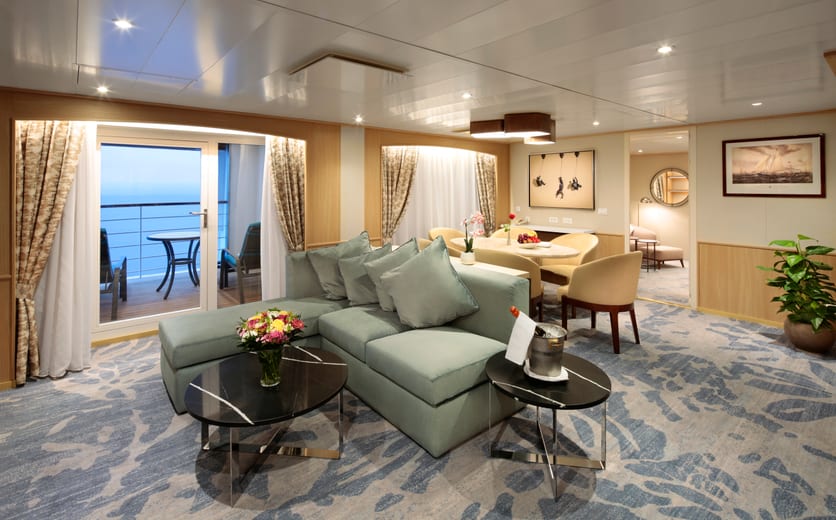
With 575 square feet, your Owner's Suite offers separate living room and dining areas. A veranda, Interactive TVs, and a full master bath and separate powder room indulge you in spacious comfort.
Newly Redesigned Restrooms
We reimagined our restrooms to provide you a private oasis within your own room.
Amenities
from £5,271 per person
Stylish comfort and ocean views welcome you in 277 square feet. Your queen bed (which can be separated as twins if you prefer) features luxurious Egyptian cotton linens. Enjoy a luxurious soak in your full-size tub or an invigorating shower, then wrap up in your waffle-weave robe and slippers, savor a treat from the fresh fruit bowl, or simply stretch out and enjoy the fresh flowers.
Newly Redesigned Restrooms
We reimagined our restrooms to provide you a private oasis within your own room.
Amenities
Stylish comfort and ocean views welcome you in 277 square feet. Your queen bed (which can be separated as twins if you prefer) features luxurious Egyptian cotton linens. Enjoy a luxurious soak in your full-size tub or an invigorating shower, then wrap up in your waffle-weave robe and slippers, savour a treat from the fresh fruit bowl, or simply stretch out and enjoy the fresh flowers.
Newly Redesigned Restrooms
We reimagined our restrooms to provide you a private oasis within your own room.
Amenities
Stylish comfort and ocean views welcome you in 277 square feet. Your queen bed (which can be separated as twins if you prefer) features luxurious Egyptian cotton linens. Enjoy a luxurious soak in your full-size tub or an invigorating shower, then wrap up in your waffle-weave robe and slippers, savour a treat from the fresh fruit bowl, or simply stretch out and enjoy the fresh flowers.
Newly Redesigned Restrooms
We reimagined our restrooms to provide you a private oasis within your own room.
Amenities
Stylish comfort and ocean views welcome you in 277 square feet. Your queen bed (which can be separated as twins if you prefer) features luxurious Egyptian cotton linens. Enjoy a luxurious soak in your full-size tub or an invigorating shower, then wrap up in your waffle-weave robe and slippers, savor a treat from the fresh fruit bowl, or simply stretch out and enjoy the fresh flowers.
Newly Redesigned Restrooms
We reimagined our restrooms to provide you a private oasis within your own room.
Amenities
As soon as you walk through the door, you’re greeted with an open living area for a more welcoming entrance. Drift off to sleep by the window in your queen bed as you watch the same stars that sailors used to navigate the seas hundreds of years ago.
Newly Redesigned Restrooms
We reimagined our restrooms to provide you a private oasis within your own room.
Amenities
Stylish comfort and ocean views welcome you in 277 square feet. Your queen bed (which can be separated as twins if you prefer) features luxurious Egyptian cotton linens. Enjoy a luxurious soak in your full-size tub or an invigorating shower, then wrap up in your waffle-weave robe and slippers, savour a treat from the fresh fruit bowl, or simply stretch out and enjoy the fresh flowers.
Newly Redesigned Restrooms
We reimagined our restrooms to provide you a private oasis within your own room.
Amenities
Stylish comfort and ocean views welcome you in 277 square feet. Your queen bed (which can be separated as twins if you prefer) features luxurious Egyptian cotton linens. Enjoy a luxurious soak in your full-size tub or an invigorating shower, then wrap up in your waffle-weave robe and slippers, savour a treat from the fresh fruit bowl, or simply stretch out and enjoy the fresh flowers.
Newly Redesigned Restrooms
We reimagined our restrooms to provide you a private oasis within your own room.
Amenities
As soon as you walk through the door, you’re greeted with an open living area for a more welcoming entrance. Drift off to sleep by the window in your queen bed as you watch the same stars that sailors used to navigate the seas hundreds of years ago.
Newly Redesigned Restrooms
We reimagined our restrooms to provide you a private oasis within your own room.
Amenities
As soon as you walk through the door, you’re greeted with an open living area for a more welcoming entrance. Drift off to sleep by the window in your queen bed as you watch the same stars that sailors used to navigate the seas hundreds of years ago.
Newly Redesigned Restrooms
We reimagined our restrooms to provide you a private oasis within your own room.
Amenities
Brand new Deluxe Suites welcome you with 468 square feet of casually elegant living space and an ocean viewing French balcony. All these suites feature 3rd berths, and a sleep-inducing queen bed easily converted to twins.
Newly Redesigned Restrooms
We reimagined our restrooms to provide you a private oasis within your own room.
Amenities
Relax in 400 to 530 spacious square feet. Your living area offers beautiful views from the forward-facing window and French doors onto your private veranda. Two spacious closets give you plenty of room to unpack.
Newly Redesigned Restrooms
We reimagined our restrooms to provide you a private oasis within your own room.
Amenities
These rooms represent a nod to the sailing tradition of porthole windows. And while sailors might have had cramped quarters, your 277 square foot stateroom is wonderfully spacious and furnished with all the modern amenities and comforts of home.
Newly Redesigned Restrooms
We reimagined our restrooms to provide you a private oasis within your own room.
Amenities
A stunning brand new owner's suites with 820 square feet of space featuring two bedrooms and two bathrooms, a verandah, and plenty of space in the sitting area for entertaining. This is the most sought after suite on the entire ship and once you stay here, you'll never stay anywhere else.
Newly Redesigned Restrooms
We reimagined our restrooms to provide you a private oasis within your own room.
Amenities
With 575 square feet, your Owner's Suite offers separate living room and dining areas. A veranda, Interactive TVs, and a full master bath and separate powder room indulge you in spacious comfort.
Newly Redesigned Restrooms
We reimagined our restrooms to provide you a private oasis within your own room.
Amenities
Queen Size Bed with Luxurious Linens
Inspired by the design of The Broadmoor, the suite offers a traditional space with classic furniture, floral motifs, white trim with gold finishes, and wide crown moulding. New furnishings, and wall sconces have been specially commissioned in the resort's style. The striking wallpaper used in the suite's walk-in closet is an exact replica of the wallpaper used throughout The Broadmoor. The resort's signature carpeting, with shades of light blue, brown, yellow and gold, was also recreated for the space. Historical black and white images of The Broadmoor will be on display.
Newly Redesigned Restrooms
We reimagined our restrooms to provide you a private oasis within your own room.
Amenities
This suite will offer a coastal airy space with curved arches, lovely "hardwood" floors, gorgeous inset carpeting, light walls, and white trim with black finishes. New antique-style furnishings and custom wallpapers have been specially commissioned in the resort's style. You'll never see a TV at Sea Island (they are all tucked away in cabinets), so you won't see one in this suite, either. Historical black and white images of Sea Island will be on display.
Newly Redesigned Restrooms
We reimagined our restrooms to provide you a private oasis within your own room.
Amenities
With 575 square feet, your Owner's Suite offers separate living room and dining areas. A veranda, Interactive TVs, and a full master bath and separate powder room indulge you in spacious comfort.
Newly Redesigned Restrooms
We reimagined our restrooms to provide you a private oasis within your own room.
Amenities
 0203 930 4640